Prof. Dr. Jan B. Schmutz
UZH psychologist Prof. Dr. Jan B. Schmutz studies the human factors that will shape the future of space exploration. In this interview, he discusses how isolation, confinement, team dynamics, and human–AI collaboration influence astronaut performance and well-being during long-duration missions. Drawing on research conducted in Antarctica and other space analog environments, he highlights what it will take for humans to successfully live and work together on future missions to the Moon, Mars, and beyond.
Interview
[UZH Space]: When people think about space exploration, they often think of rockets and
technology. What is space psychology, and why is it important for future space
missions?
[Prof. Dr. Jan B. Schmutz]: Space psychology examines the psychological dimension of space travel. a side of the equation that tends to get overlooked compared to the engineering challenges. We know that space imposes serious physiological demands on the body: muscle atrophy, bone density loss, cardiovascular changes, and radiation exposure. But these physical stressors also translate directly into psychological effects, they affect mood, cognitive performance, stress regulation, and ultimately how well someone can function as part of a crew.
Beyond the physical dimension, astronauts face profound psychological stressors rooted in the environment itself: prolonged isolation from family and friends, confinement in a small habitat, the absence of natural stimuli like sunlight or open spaces, the constant awareness of an inherently hostile environment, and communication delays that become significant on missions to the Moon or Mars. These factors compound over time and can erode psychological well-being in ways that are hard to anticipate from the ground.
At the team level, the challenges multiply. Crew members are forced into close proximity with the same small group of people, often from different cultural backgrounds, for months or years at a time. There is no escaping interpersonal tensions by going home. Cultural differences, communication styles, perceived fairness, and simply the fatigue of constant social proximity can all create friction that, if unmanaged, threatens mission safety.
The interpersonal dimension becomes increasingly critical as we plan longer missions, to the Moon, to Mars, or to a permanent lunar base. A six-month mission to the ISS is demanding; a three-year Mars mission is a fundamentally different psychological proposition. In everyday work life, we recover from conflict or strain by leaving the office. Astronauts do not have that option, work and living space are one and the same, and their only social world is their crewmates. Managing relationships and psychological health under those conditions is not just a welfare issue; it is a mission-critical competency.
You conduct research in places like Antarctica and simulated space habitats. Why are these environments so valuable for understanding future space missions?
To build a reliable evidence base, we need studies with sufficient sample sizes, but the number of people who actually travel to space is tiny. There have been fewer than 700 astronauts in history and oftentimes we cannot access them for research. That is simply not enough to conduct the kind of rigorous, statistically powered research that can inform evidence-based mission design.
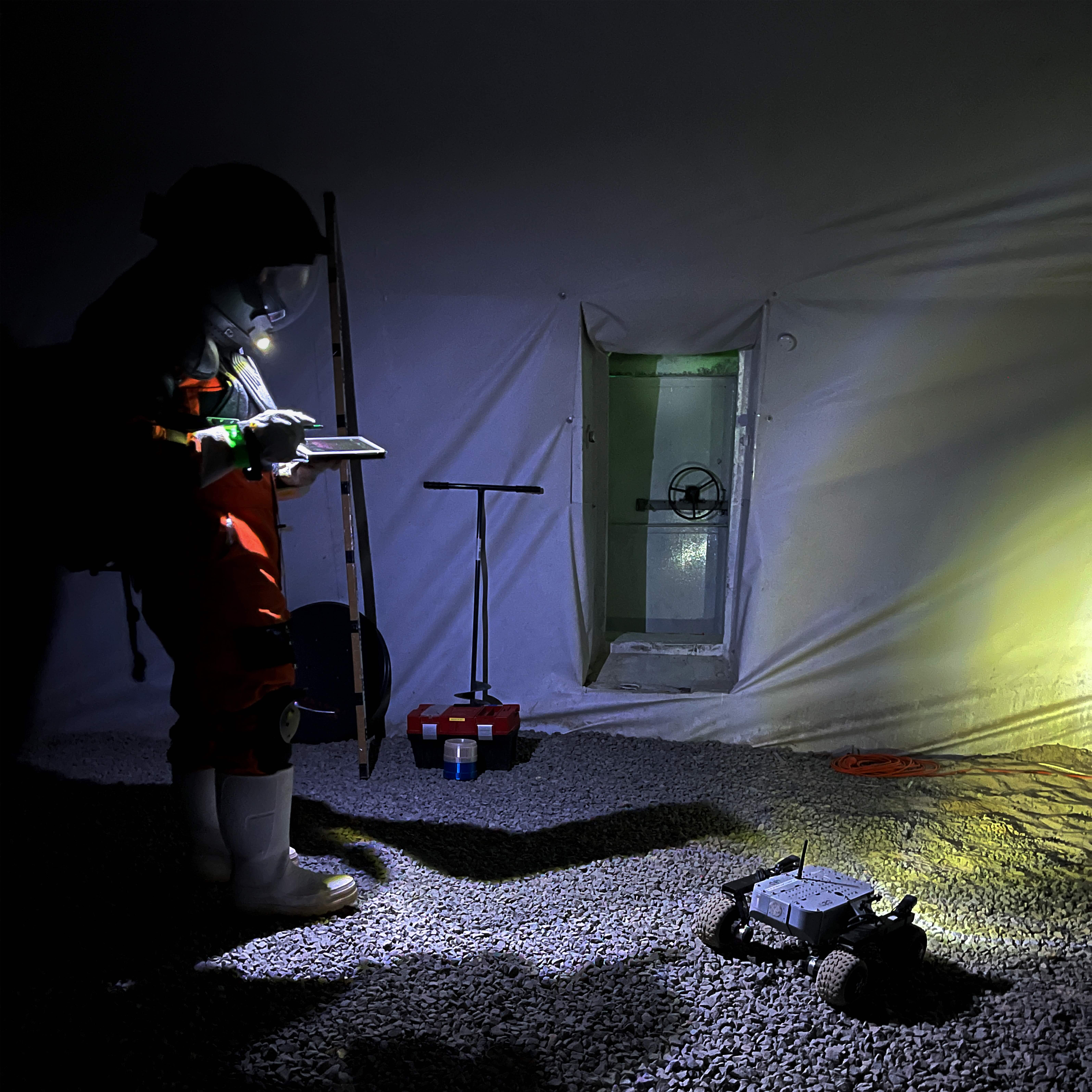
This is why so-called space analogs are so important. These are environments on Earth that recreate key psychological features of spaceflight: isolation, confinement, small crew sizes, high stakes, and limited outside support. Examples include NASA’s HERA (Human Exploration Research Analog) station in Houston, the Lunares Research Station in Poland,the Desert MARS analog station at Makhtesh Ramon in Israel’s Negev desert, and in Switzerland, the Asclepios missions in the Gotthard caves.
Concordia Station in Antarctica, where our lab has conducted research, is arguably the most extreme analog available. Outside temperatures can drop below −50°C, making excursions impossible without specialized equipment. During the polar winter, the station is completely cut off, no resupply, no evacuation. The nearest civilization is actually farther away than the International Space Station is from Earth. A small overwintering crew lives and works together in complete isolation for roughly nine months.
Our recent work published in PNAS used wearable sociometric sensors to track social interaction patterns in an Antarctic overwintering team across a 10-month mission. This level of longitudinal, objective data on social dynamics would be impossible to collect in actual spaceflight. Analog environments give us the methodological access we need to generate the insights that can one day protect crews on missions to the Moon and Mars.
-
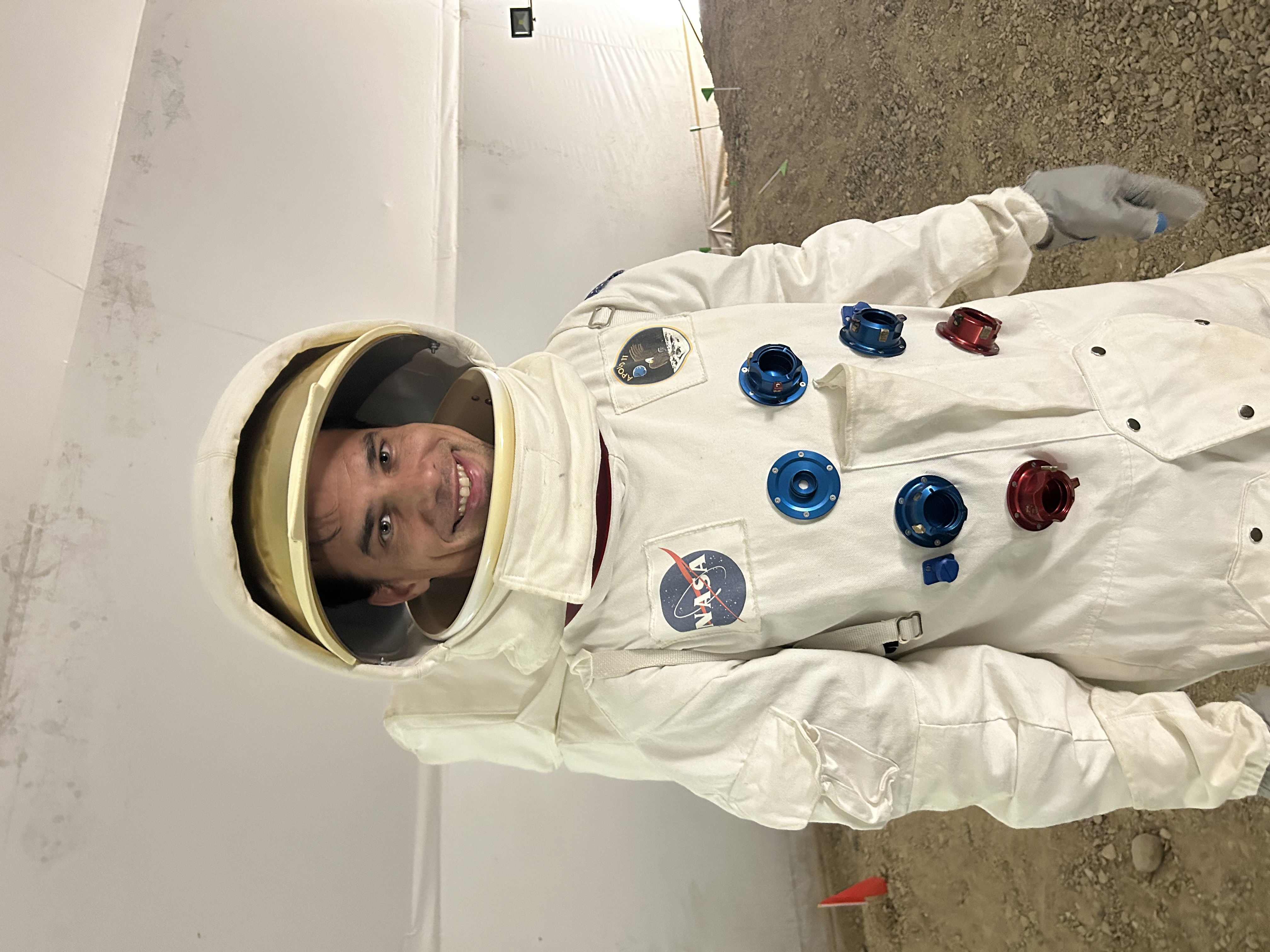
- Prof. Dr. Jan B. Schmutz at the Lunares Research Station (https://lunares.space)
Long-duration missions involve isolation, confinement, and high-pressure teamwork. What have you learned about how people cope with these challenges, and what makes teams perform well under such conditions?
There is of coures no single secret to team success in extreme environments, teamwork is a dynamic, multifaceted system that must be understood in its full complexity. That said, our research does point to several consistent and evidence-backed factors.
Stress and resource depletion are perhaps the most fundamental challenges. Under sustained pressure, individuals tend to become less prosocial, in extreme cases, entering a kind of self-preservation mode that is deeply counterproductive in a team context. Social withdrawal is a natural psychological response to resource depletion, but in a confined habitat with a small interdependent crew, it can create a vicious cycle of reduced interaction, misunderstanding, and conflict escalation.
Our Antarctica research highlights how affective experiences, both positive uplifts and negative hassles, unfold dynamically within teams in isolated, confined and extreme (ICE) environments. We found that social, mission-related, and environmental uplifts elevate positive affect, while social friction, physical strain, and environmental stressors elevate negative affect. Crucially, these emotional states transfer between teammates. This means coping cannot be treated as a purely individual matter; it must be understood and developed as a collective team competency.
Psychological safety, the shared belief that it is safe to speak up, voice concerns, ask questions, and flag problems without fear of ridicule or reprisal, is one of the most consistently important team factors we have identified. Teams with high psychological safety are better at catching errors early, managing conflicts before they escalate, and maintaining open communication under pressure. Establishing this kind of climate is especially critical when communication delays make it impossible to consult mission control in real time.
Team reflexivity is another key mechanism our research has focused on extensively. This refers to a team’s capacity to step back and collectively reflect on their goals, processes, and interactions, essentially to debrief. Our studies, including work in medical emergency teams and extreme crews, consistently show that teams that regularly engage in structured reflection are more adaptive, perform better, and have healthier and more satisfied members. For space crews, building debriefing into the mission rhythm is not a luxury, it is a core operational tool.
Finally, conflict management skills at the individual level are crucial. Team members need to be able to raise concerns early and directly, before tensions harden. The longer a conflict goes unaddressed in a confined environment, the more entrenched and damaging it becomes.
How can the findings from your research help improve the selection, training, and long-term performance of astronaut crews on future missions to the Moon and Mars?
Our research is primarily focused on team processes rather than selection per se, though the two are closely linked. Selection can establish a strong baseline, research points to the value of psychological stability (low neuroticism), agreeableness, and the capacity to regulate interpersonal conflict. But selection alone cannot ensure a team will function well over years in confinement. The composition of a crew matters, but so does what they do together once the mission begins.
Training programs for future astronaut crews should incorporate structured team reflection skills, not just individual debriefing techniques, but the capacity for a crew to facilitate genuine collective sensemaking. Our research suggests that teams need to practice and internalize a debriefing culture before they deploy it under pressure. This could be trained explicitly in analog environments or during Antarctic expeditions.
Psychological safety also needs to be actively cultivated, not assumed. Crews should understand what it is, why it matters, and how to build and maintain it. This is not a soft add-on, it is a safety-critical competency. In a Mars mission context, where communication delays with Earth can reach 20 minutes each way, the crew must be able to manage decisions, disagreements, and crises autonomously. That requires a team climate where everyone can speak up.
Our lab has also been developing social network monitoring approaches, using both sociometric wearable sensors and survey-based methods to map interaction patterns over time. Our PNAS study demonstrated the feasibility of this approach in a 10-month Antarctic mission. In future space missions, continuous and unobtrusive monitoring of crew interaction dynamics could provide early warning signals of social deterioration, allowing for timely intervention before problems become crises.
Looking further ahead, I believe the field needs longitudinal intervention studies, designs that test whether training in team reflexivity, psychological safety, and coping actually changes outcomes over the arc of a long mission, not just in short controlled trials.
You also study human–AI collaboration. As artificial intelligence becomes increasingly integrated into space missions, how do you see AI changing the way astronauts work and make decisions?
We are at an inflection point in how we think about AI in teams. For most of the recent past, AI has functioned as a sophisticated tool, an instrument that helps humans make decisions, such as diagnostic support systems in medicine. The human remains the agent; the AI provides information or analysis. This is already changing.
In the near future, AI will become an active and agentic team member, something that proactively participates in the team’s processes, communicates, initiates, and contributes to shared goals. My research group is currently involved in several interdisciplinary projects with computer scientists investigating what effective human-AI teaming looks like: how an AI crew member should communicate, how much autonomy it should have, how teams adapt their coordination patterns when working alongside AI rather than just with AI.
In space, this will be particularly consequential. As AI systems become more capable, they may take on roles in mission monitoring, resource management, emergency response, and crew support. The example from the classic science fiction — the HAL 9000 in Kubrick’s 2001: A Space Odyssey, refusing to open the pod bay doors because opening them would conflict with the mission objective — is a vivid illustration of the design and ethical questions that become very real as AI becomes more autonomous. Who decides when AI overrides human judgment? Under what conditions does an AI system protect a mission at the cost of a crew member? These are not merely technical questions; they are profoundly psychological and ethical ones.
My lab’s research on human-AI teams (HATs) has explored how AI team members affect group decision-making, information sharing, and trust dynamics. One key insight is that trust calibration matters enormously, crews need to know when to rely on AI judgment and when to override it. Over-trust and under-trust are both failure modes. Training crews to work with AI as a team member, not just as a tool, is a challenge we need to take seriously.
Looking ahead, what do you think will be the most important human factors to get right if we want people to live and work successfully in space for months or even years at a time?
One fundamental tension that I think will define long-duration missions is the conflict between enforced togetherness and the human need for privacy and psychological space. We are social animals, but we are also creatures who need recovery, solitude, and the ability to step away from others. In confined habitats, that is structurally unavailable. We see analogous challenges in analogous environments, submarines, remote oil platforms, Antarctic overwintering stations, and the evidence suggests that this tension does not simply go away with selection or habituation. It needs to be actively managed through habitat design, scheduling, and psychological support structures.
Our recent Antarctica research adds an important nuance here: the emotional dynamics of ICE teams are not uniformly negative. We found that teams experience meaningful uplifts alongside the hassles, moments of shared achievement, humor, connection, and even awe at the environment. Designing missions that protect and amplify these positive shared experiences, not just mitigate the negative ones, is an underappreciated design challenge.
Technology will play a growing role in supporting psychological health. Virtual reality is a particularly promising avenue, the possibility of simulating open spaces, natural environments, social gatherings, or simply familiar places from home could meaningfully buffer the psychological effects of confinement over long missions. We are only beginning to understand how to design and deploy such interventions effectively.
Finally, I think the field needs to be honest that we are asking humans to do something genuinely unprecedented. A three-year Mars mission is not just a longer ISS stay. The communication delay, the irrevocability of the journey, the distance from Earth, these create a qualitatively different psychological reality and frankly, goes against our nature. We will learn from analogs, but we also need humility about what we do not yet know, and we need to build missions that can adapt and respond as we learn more, especially from the psychological side.
Interview: Dr. Jean-Noël Mettler (UZH Space) with Prof. Dr. Jan B. Schmutz, Department of Psychology, University of Zurich.
Find out more about Prof. Dr. Jan B. Schmutz:
Space Psychology and Team Dynamics in Space
https://www.psychologie.uzh.ch/de/bereiche/sob/atfor/team/jschmut.html
Links to his research:
Cantisani, A., Schmutz, J. B. [equal contribution], Marques-Quinteiro, P., Dall'Amico, L., Cattuto, C., Antino, M., Eppich, W. J., Stegmayer, K., & Walther, S. (2026). Social interactions in isolated, confined, and extreme environments: A study of Antarctic winter teams using wearable sensors. Proceedings of the National Academy of Sciences. 123 (22) e2533420123.
https://doi.org/10.1073/pnas.2533420123
Schmutz, J. B., Marques-Quinteiro, P., Antino, M., Filha, F. & Eppich, W. J. (2026). Navigating Affective Extremes in Antarctica: Coping Strategies for Individuals and Teams in Confined Environments. Environment & Behavior, Advance online publication
. https://doi.org/10.1177/00139165261427136
Marques-Quinteiro, P., Schmutz, J. B., Antino, M., Maynard, M. T., & Eppich, W. J. (2025). A process model of team effectiveness in extreme environments. Applied Psychology(74), 5.
https://doi.org/10.1111/apps.70037
Rätze, S., Steputat-Rätze, A., Müller, H., Maynard, T. & Schmutz, J. B. (2025). Teamwork Under Adversity: An Integrative Review and Future Research Agenda. Academy of Management Annals. Advance online publication
. https://doi.org/10.5465/annals.2022.0217
Marques-Quinteiro, P., Schmutz, J. B., Antino, M., Eppich, W. & Maynard, T. (2024). Adaptation Triggers and Team Performance in Extreme Contexts: Evidence from an Antarctic Summer Campaign. Group and Organizational Management. Advance online publication.
https://doi.org/10.1177/10596011241287945
Schmutz, J. B., Bienefeld, N., Maynard M. T. & Rico, R. (2023). Exceeding the Ordinary: A Framework for Examining Teams across the Extremeness Continuum and its Impact on Future Research. Group and Organizational Management, 48, 581-628
. https://doi.org/10.1177/10596011221150756