Ethics and Theology
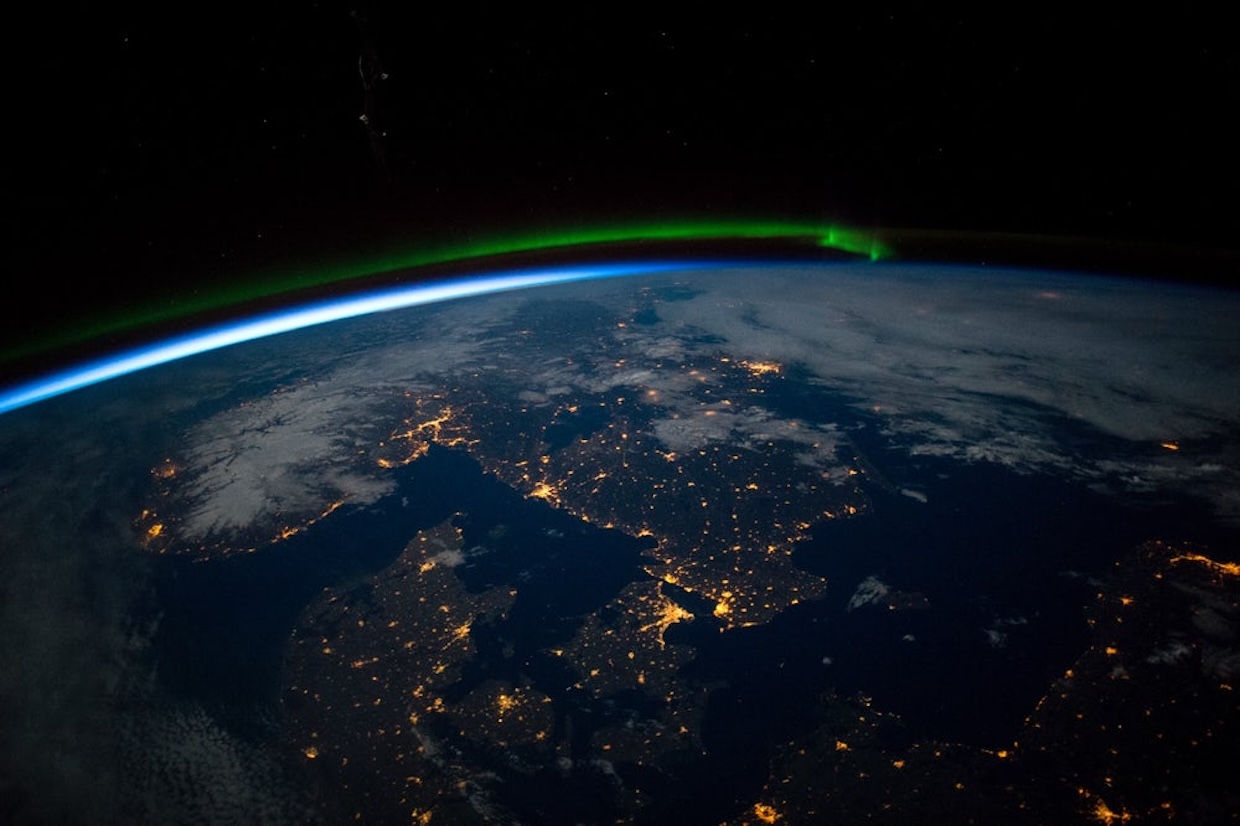
Our space environment is being used more and more intensively, mega constellations are beginning to light up the night sky and disrupt astronomy. Junk is accumulating in the more heavily used Earth orbits, increasing the risk of a cascade effect which renders spacefaring impossible. Meanwhile, several countries now want to go to the Moon, and this time plan to use its resources.
As our time on Earth is limited, we need to be able to move. But we need ethical guidelines in the area of outer space, which is an international domain, especially because the law remains open to interpretation.
The Need for Truly Interdisciplinary Approaches
In the sciences and medicine, the past decades have seen an unprecedented differentiation and specialization. The necessity of interdisciplinarity is especially evident where one discipline alone cannot provide answers for methodological reasons: Thus, the intersubjectively objective criteria of scientific knowledge extend to empirical predictions, but not to ontologies. The aim of interdisciplinary studies is to explore the possibilities of how far the dialogical relationship between theology and natural sciences can be sharpened in such a way that conceptually relevant insights from the natural sciences enrich theology and insights from theology in turn enrich the empirical processes of the natural sciences.
Humankind is just acquiring the technical and scientific skills for interplanetary travel. Whereas the natural sciences could provide the building blocks of an interdisciplinary bridge to expand theology with answers about the universality of life and the role of humankind in the universe, the question about the relation between humankind and the Universe touches core areas of Christian faith, such as the need for redemption, the Christology, and the eschatology. Because both Theology and Natural Sciences are equally based on the claim of rationality and truth and are fields of activity of human reason, the guiding principle is the search for interdisciplinary bridges to understand the universality of life and the role of humankind in the context of the universe, which could lead us towards a truly holistic concept of "space-oriented sustainability".
Ethics and Theology applied to Space
Planetary Sustainability
Under the heading “planetary sustainability”, researchers at UZH are working to link the issues of sustainable space use with the environmental debate here on Earth. Within this framework, PD Dr. Andreas Losch is developing the outline for an 18th Sustainable Development Goal for our space environment. More information on this joint project with the University of Bern you find on www.planetarysustainability.info.
Theological Theories of Space
In his habilitation on the Theological Theory of Space, Prof. Dr. Matthias Wüthrich addressed an issue that had not been extensively researched before, closing a gap in the current discourse of systematic theology. The aim of the study is to conceive of “space/spatiality” from the perspective of theology in interaction with philosophy and the cultural sciences.
Prof. Wüthrich is currently writing a book titled “Eine Theologie des Himmels”, which not only analyzes the religious heaven, but also attempts to interpret the sky/space as studied by natural science in theological terms.
Point of Contact:Andreas Losch