Space Café Event - Career Talk: From Spacecraft Data to Deep Space Discovery, May 8th, 2pm, Irchel Campus Y11-F-06
Dr. Rona Oran is a computational scientist working at the forefront of plasma physics, space exploration, and scientific computing. In this Space Café talk, she will share how her work on NASA’s Psyche mission, solar wind modeling, and magnetic signals is helping scientists better understand planetary environments, while highlighting career opportunities for students interested in scientific computing, software engineering, and AI.
Some careers are straightforward, others are a roller coaster of choices, failures, and successes. Sometimes we ask ourselves if we are made for a specific position, if it suits us, or if it will be fitting our curriculum. However, surprises are always around the corner and your career might take a shift turn that you have not even thought about some years earlier.
This event will take place in a hybrid mode, on-site (Irchel campus, Y11-F-06) and online. However, seats are limited and will be assigned on a first come-first serve basis. Registration at the end of this page
More about the Space Café event series
UZH Space is pleased to invite you to our next Space Café:
📃Event Title: Career Talk: From Spacecraft Data to Deep Space Discovery
🎤Speaker: Dr. Rona Oran (MIT)
⏰Date and Time: May 8th @ 14:00. Will last about an hour.
🏢Location: UZH Irchel Campus, room Y11-F-06 (in-person), or online (link will be provided before the event)
Note that there will be snacks at the end of the seminar which allows for further discussions and questions as well as exchange of opinions and concerns.
Abstract
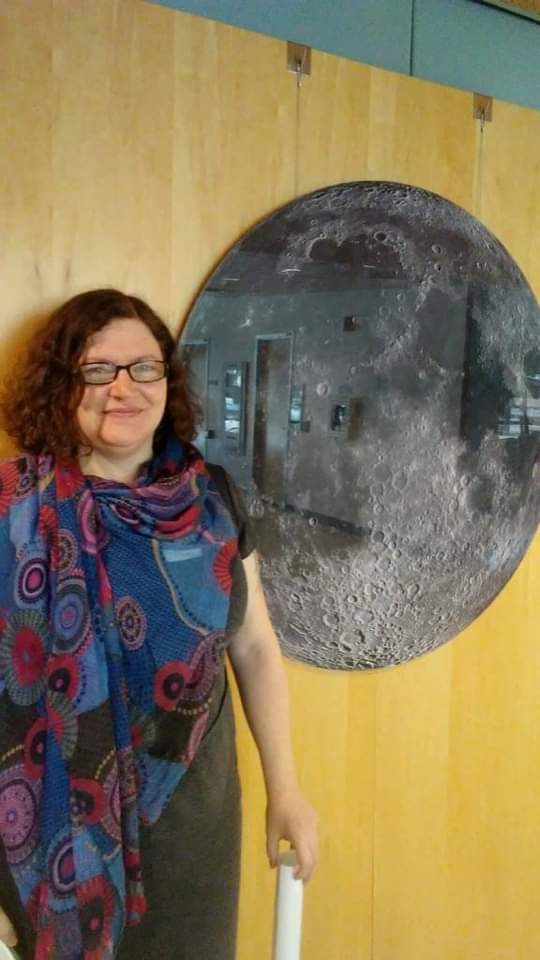
Dr. Rona Oran (MIT) is a computational scientist working at the intersection of plasma physics, space exploration, and scientific computing. Her career has spanned spacecraft engineering, space weather modeling, planetary magnetism, and asteroid exploration, with a focus on developing high-performance, data-driven models of the solar wind and its interaction with planetary environments.
As the Magnetometry Investigation Scientist on NASA’s Psyche mission, she designed and implemented a mission-grade data pipeline to process downlinked spacecraft data and developed analysis algorithms to detect magnetic signals from the asteroid 16 Psyche. These methods directly informed the design and planning of science operations for the mission, which is scheduled to arrive at the asteroid in 2029.
Her work also includes the development of multi-physics solar wind prediction models used by national space weather centers, as well as current efforts to build AI-driven approaches for forecasting solar wind conditions in support of the Psyche mission. She also leads a team of researchers studying how asteroid impacts on the Moon may have altered its magnetization.
In this Space Café talk, she will share her interdisciplinary career path, discuss how computational methods enable discovery in space science, and highlight opportunities for students interested in scientific computing, software engineering, and AI in research and beyond.